

Being Blackmailed on Ashley Madison: A Response Guide
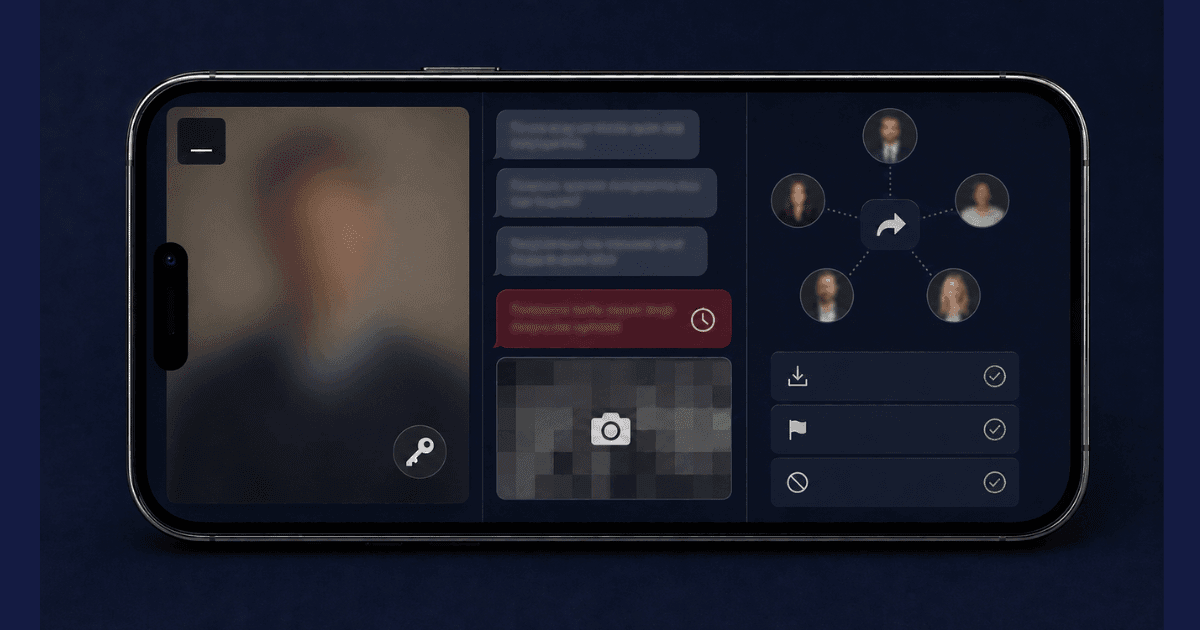
If you're being blackmailed on Ashley Madison, the first thing that matters is whether the person actually has real material or is just claiming they do; most of these threats have no real access behind them, while some genuinely do. Both types combine the same playbook of account exposure, spouse contact threats, and public shaming demands, but knowing which one you're facing changes how urgently the rest of your response needs to move. This guide walks through how to handle it discreetly, from the first hour through content removal and long-term reputation protection.
Understand How Ashley Madison Blackmail Works
Attackers targeting Ashley Madison users lean on shame and time pressure rather than technical sophistication, and cases split into two categories: those where the attacker has no real access, and those where they do; telling a blackmailer's bluff from a real threat is the single most important judgment call in the whole response.
Email-Only Extortion Bluffs
The most common variant is a mass email claiming the sender has activity records, chat history, or photos from your account, built from email address matches, breach compilations (including data that traces back to Ashley Madison's well-known 2015 breach), or subscription lists sold by insiders. It threatens to email your spouse, employer, or family. Almost all mass-emailed variants are bluffs; the sender has no material and mailed the same threat to thousands of addresses at once.
Individually Targeted Cases
Some cases involve someone who genuinely has real content, whether through a compromised support account, a data reseller, or a former contact who shared it directly. These cases reference specifics only you would recognize, a real display name, an actual message, a real photograph, and they require faster, more careful handling than a bluff does.
Follow-Up Contact After Payment
Attackers who succeed with a single victim reuse the target, regardless of which category the original threat came from. If you have already paid, the case is now in an active file and additional demands are likely.
Immediate Response in the First Hour
Discretion matters here as much as speed. What you do in the first hour determines whether the case stays contained or spreads to people you care about.
- Do Not Pay and Do Not Reply: Payment confirms your identity, confirms your fear response, and puts you on a resell list traded between operators. Replies do the same; even a defensive reply signals you are viable. Silence combined with evidence preservation is the correct posture.
- Screenshot the Email and Full Headers: Save the full email including complete headers, which show routing information investigators use to trace the origin. In Gmail, use "Show original"; in Outlook, use "File → Properties." Save as PDF or forward to a separate email address for archival.
- Save Any Provided Proof: If the attacker attached a screenshot, video, or claimed transcript, save it locally as evidence, but do not open unfamiliar attachments in your main environment. Use a secondary device or download the file to a folder without previewing, since attackers sometimes include tracking pixels or malicious payloads.
Secure Your Accounts and Digital Footprint
Ashley Madison blackmail almost always accompanies broader digital exposure, so address the whole footprint, not just the account. If the extortion email references an old password, that password was breached somewhere and should be considered compromised across every service that used it; rotate every account tied to that email, prioritizing banking, primary email, and social media. Every high-value account should have 2FA enabled with an authenticator app, not SMS, since SMS is vulnerable to SIM-swap attacks that attackers escalate to during active cases. If the Ashley Madison account is still active, log in from a private browser session, update the recovery email to a fresh address you control, and either close the account entirely or scrub identifying details; any historical content remains on Ashley Madison's servers, but the visible profile becomes harder to link to your identity.
Need Expert Help?
Our team has resolved thousands of cases. Get confidential support now.
Report the Threat Formally
Reporting creates the paper trail you need for content removal, insurance claims, and any later civil action; knowing how to report blackmail online properly from the start is what turns an individual complaint into something law enforcement can actually act on. The FBI Internet Crime Complaint Center categorizes Ashley Madison and similar cases under sextortion and cyber-enabled extortion; include the full email with headers, any payment demand details such as a Bitcoin address, PayPal handle, or gift-card request, and a timeline, since cases with cryptocurrency demands often cluster and law enforcement uses that clustering to identify operators. The FTC's ReportFraud.ftc.gov accepts sextortion complaints too and shares them with law enforcement partners; UK victims report to Action Fraud, Canadian victims to the Canadian Anti-Fraud Centre, and EU victims can involve Europol alongside national police. Whatever you do, don't contact the attacker directly to threaten legal action, plead, or try to reason with them, that's counterproductive in every documented case. Reporting is what actually does the work; direct communication only prolongs the exchange.
Coordinate Content Removal If Anything Real Exists
If the case involves actual material rather than a bluff, removal is time-critical; even for bluffs, it's worth checking whether any of your Ashley Madison data has surfaced online. Check Have I Been Pwned for known breaches involving your email, and if your address appears in a breach, rotate that password immediately and treat the associated account as compromised. If the attacker actually leaks content, screenshots, chat logs, or images, file removal requests on every platform where it appears, using non-consensual intimate imagery reporting flows on Google, Meta, and X where relevant; professional removal support accelerates this when content is spreading across multiple sites. Long-term reputation control extends beyond removing specific pieces of content. Search-result de-indexing, positive-content strategies, and ongoing reputation protection services all play a role in keeping the case from resurfacing months later.
Protect Yourself Long-Term
Ashley Madison blackmail rarely resolves the first day, so long-term protection matters as much as the acute response. Isolation compounds the psychological weight of extortion cases; talking to a spouse, close friend, therapist, or attorney, someone bound to discretion, removes the leverage attackers rely on, and many victims find that revealing the situation on their own terms neutralizes most of the threat. Attackers who fail with one message often send follow-ups from new addresses, so set up email filters that flag messages containing specific keywords from the original threat, and check junk folders weekly for anything routed there. Data brokers sell email-address-to-name-to-address mappings that let attackers move from a leaked address to a real identity; a one-time data-broker removal reduces future targeting materially.
Get Professional Help for Ashley Madison Blackmail
Ashley Madison cases combine emotional stakes with digital-forensic complexity. Specialist teams can review the email headers, cross-reference the sender against known operator databases, coordinate law-enforcement reporting, and manage any content removal work in parallel while you focus on discreet personal handling. Because these cases often involve spouses, employers, or professional communities, controlled disclosure, planned by you rather than forced by the attacker, is often the single most effective step.
If you are currently being blackmailed on Ashley Madison, do not pay, do not reply, and preserve the email with full headers. Reach out for coordinated response support if the case involves real material or if follow-up contact begins. Discreet response teams are available for cases that require immediate action while protecting your identity throughout.
About the Author
Altahonos Team
The Altahonos Team consists of cybersecurity and online reputation management specialists with extensive experience in digital threat mitigation and content removal strategies, helping individuals and businesses protect their digital presence.
Related Resources
Trusted by Thousands
